Minimally invasive spine, joint, vascular, oncology treatments.
About
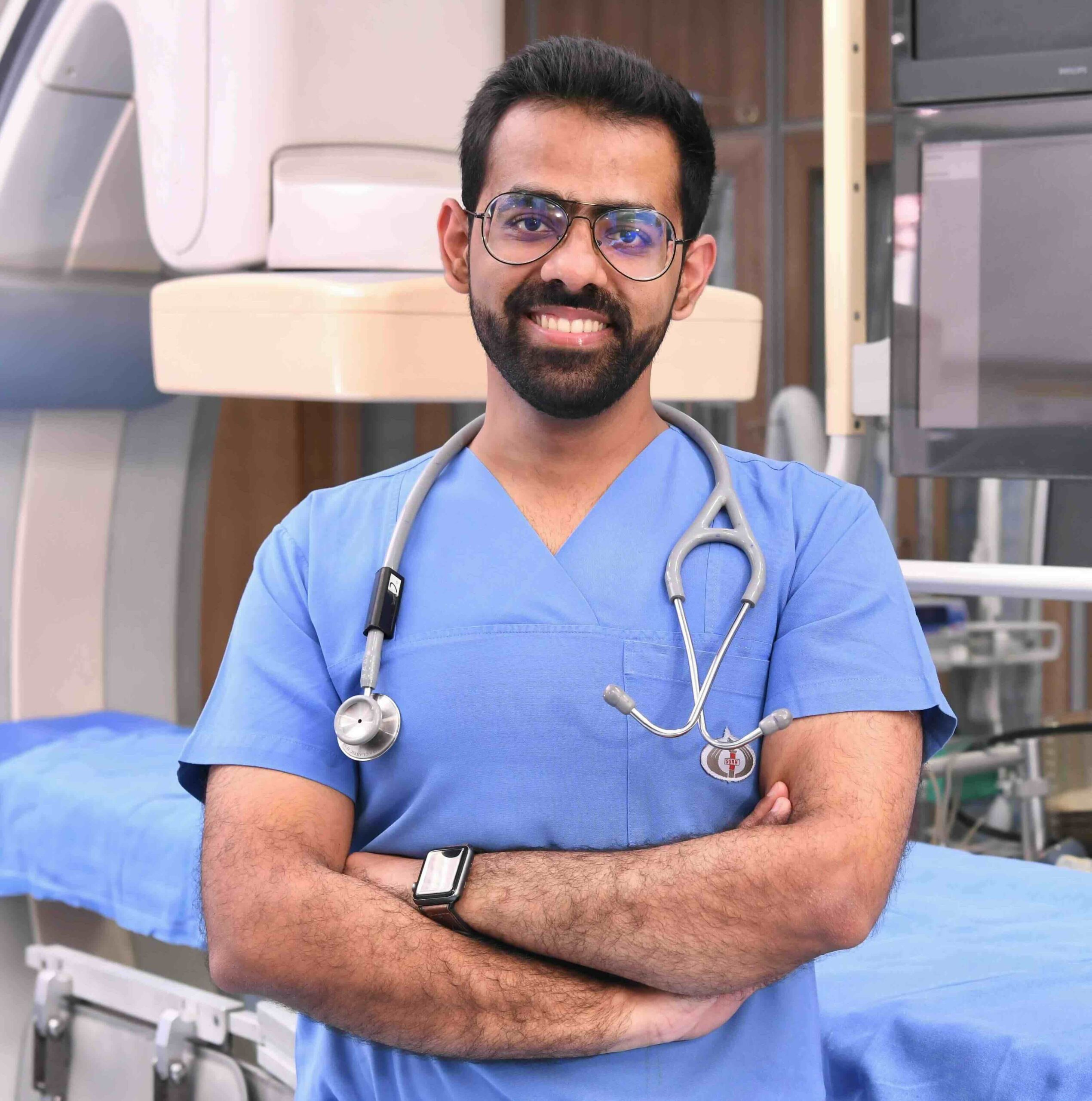
Dr. Raghav Seth, MBBS (MAMC), MD (PGI Chandigarh), DNB, FVIR (SGRH), Musculoskeletal, Sports Injury & Pain, Management Interventions (Strasbourg, France), Advanced Peripheral Arterial & Venous Interventions (LRMC & LVI, Florida, USA)
Dr. Raghav Seth is a highly skilled and patient-centric Interventional Radiologist currently practicing in New Delhi, with extensive experience in Musculoskeletal (MSK), Sports Injury, Spine, Pain Management, and advanced Vascular Interventions. He is presently serving as Associate Consultant in the Department of Interventional Radiology at Sir Ganga Ram Hospital. With elite training from Maulana Azad Medical College and PGI Chandigarh, followed by a Fellowship in Interventional Radiology at Sir Ganga Ram Hospital, he further refined his expertise through specialized training in Musculoskeletal and Pain Management Interventions at the University of Strasbourg, France. Advanced Arterial and Venous Interventions from Florida, USA
Dr. Raghav Seth specializes in cutting-edge minimally invasive image-guided procedures that enable faster recovery, minimal hospital stay, and scar-free treatment outcomes.
Using advanced imaging technologies such as ultrasound, CT scans, and fluoroscopy, he accurately diagnoses and treats a wide range of spine disorders, sports injuries, chronic pain conditions, vascular diseases, and oncologic cases. His clinical focus lies in delivering precision-driven, evidence-based treatments including spine injections, vertebroplasty, nerve blocks, embolization procedures, and tumor ablation therapies. He continuously strives to enhance patient care through early adoption of innovative techniques and globally accepted interventional radiology advancements.
His areas of expertise include:
- Vertebroplasty for osteoporotic and metastatic vertebral fractures
- Bronchial Artery Embolization (BAE)
- Facet joint blocks and Rhizolysis for chronic back pain
- Advanced nerve blocks and image-guided joint injections (Steroid, PRP, Viscosupplementation)
- Prostatic Artery Embolization (PAE)
- Uterine Artery Embolization (UAE)
- Epidural and foraminal spinal injections for disc herniation-related nerve compression
- Embolization for gastrointestinal and renal bleeding
- Image-guided biopsies (FNAC) and percutaneous drainages (PCD)
- Percutaneous Nephrostomy (PCN) and PTBD
- Interventional oncology treatments including TACE, TARE, Microwave Ablation (MWA), and Radiofrequency Ablation (RFA)
Dr. Raghav Seth has actively contributed to academic research in musculoskeletal and vascular interventional radiology, with multiple peer-reviewed publications and presentations at national and international conferences such as IRIA, ISVIR, ET (France), and CIRSE 2022 (Spain). His commitment to academic excellence, technological innovation, and compassionate patient care makes him one of the leading specialists in minimally invasive interventional radiology in New Delhi.
Interventional Radiology
Minimally invasive procedures using advanced imaging for accurate treatment and faster recovery.
Musculoskeletal Radiology
Specialized diagnosis and targeted therapies for bones, joints, spine, and sports injuries.
Image-Guided MSK Procedures
Precision joint injections and pain interventions for long-term relief without surgery.
Image Guided Vascular Interventions
Minimally invasive vascular treatments using precise real-time imaging guidance.
Advanced Interventional Radiology Services He Specializes In
Joint Pain Management
Advanced image-guided injections relieve chronic joint pain, improving mobility and restoring functional independence.
Varicocele Embolization
Image-guided embolization treats varicocele safely, improving discomfort and male fertility outcomes.
Varicose Veins
Endovenous laser therapy closes damaged veins, enhancing circulation and cosmetic appearance effectively safely.
Benign Prostatic Hyperplasia
Prostatic artery embolization effectively reduces prostate enlargement symptoms without major surgery.
Uterine Artery Embolization
Minimally invasive embolization treats fibroids and adenomyosis, preserving uterus and faster recovery time.
Thyroid
Interventions
Minimally invasive thyroid ablation and biopsies ensuring accurate diagnosis, effective treatment, and faster recovery.
Advanced Image-Guided Interventional Excellence
Delivering minimally invasive, image-guided treatments for vascular, oncologic, spine, and pain conditions with precision, safety, and faster recovery outcomes.
FAQ's
What is Interventional Radiology and how does it work?
Interventional Radiology uses advanced imaging techniques such as ultrasound, CT scans, and fluoroscopy to perform minimally invasive procedures through small needle punctures instead of large surgical incisions.
Are image-guided spine and joint pain procedures safe?
Yes. Image-guided injections like epidural injections, facet blocks, and PRP therapy are highly precise, reducing risk and improving treatment accuracy while minimizing complications and recovery time.
How does Prostatic Artery Embolization (PAE) treat BPH?
PAE works by blocking excess blood supply to the enlarged prostate, causing it to shrink gradually and relieving urinary symptoms without major surgery.
What is Uterine Artery Embolization and who is it suitable for?
UAE is a minimally invasive procedure used to treat fibroids and adenomyosis by blocking their blood supply, preserving the uterus and avoiding open surgery.
How long is the recovery after interventional radiology procedures?
Most procedures require minimal hospital stay or are done as day-care treatments, allowing patients to resume normal activities much faster than traditional surgery.